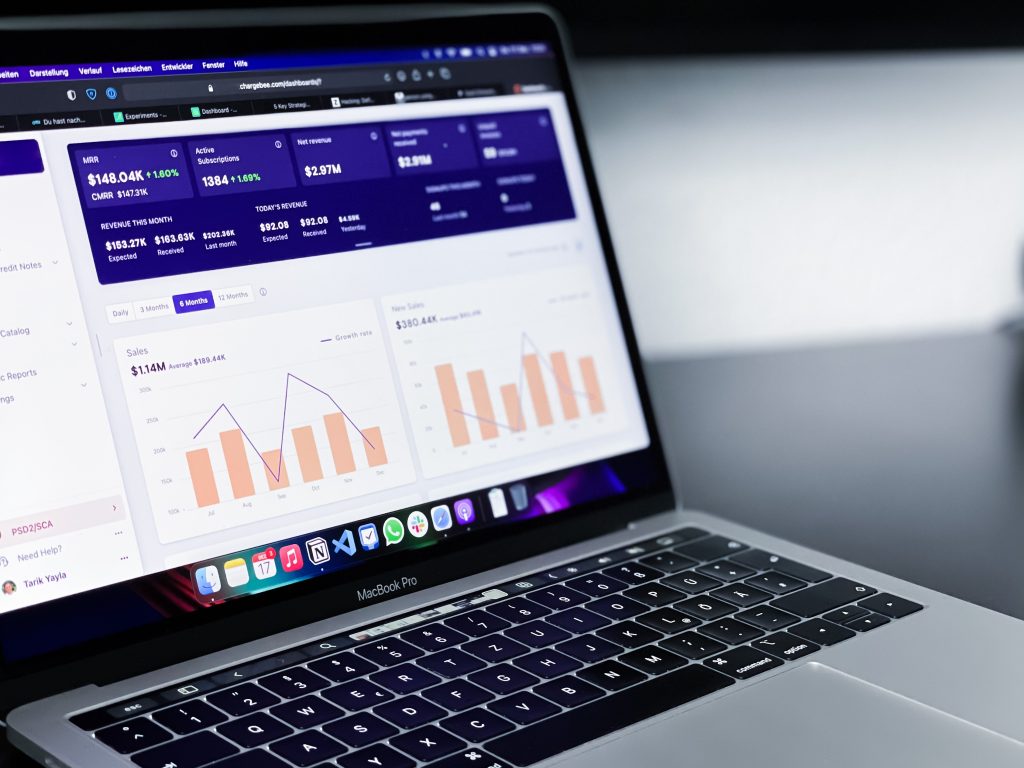
Photo by Phil Hearing on Unsplash
As we navigate the property market of 2026, the digital landscape for estate agents has evolved from a simple "online presence" to a complex ecosystem of hyper-local search signals, immersive visual storytelling, and platform integration. Whether you are a seasoned independent agent or part of a national franchise, the core question remains: is your digital marketing driving valuations, or is it merely filling space?
A digital marketing audit for small business in the property sector is no longer an optional annual check-up; it is a critical survival tool. In an era where potential vendors and landlords judge your competence by your Google ranking before they ever step foot in your office, understanding where your gaps lie is paramount.
1. The Google Business Profile (GBP) Powerhouse: Beyond the Basics
For UK estate agents, your Google Business Profile is often the first: and sometimes only: interaction a local customer has with your brand. However, many property professionals treat it as a static digital business card. To truly leverage this tool, you must move beyond basic contact details and embrace Google Business Profile optimisation at a granular level.
Audit your service areas and postcodes. In 2026, Google’s local algorithm is incredibly precise. Ensure your profile doesn’t just list a single town; specify the postcodes (e.g., NW1, B1, EH1) you truly cover. Use the "Service Areas" feature to define these boundaries. This tells Google exactly where you are relevant, helping you appear in the "Local Pack" for specific neighbourhood searches.
Optimise your categories. Are you simply listed as an "Estate Agent"? You may be missing out. Ensure you include secondary categories such as "Letting Agent," "Property Management Company," or "Real Estate Appraiser." This breadth allows you to capture diverse search intents, from a landlord looking for management to a family seeking a valuation.
Leverage GBP Products for Properties. Treat your GBP like a mini-portal. Use the "Products" feature to showcase your most prestigious current listings or specific service packages (e.g., "Premium Marketing Package" or "Professional Photography & Virtual Tour Bundle"). This increases the visual real estate of your listing and provides immediate value to searchers.
2. Local SEO: Dominating Specific Postcodes and Area Guides
While the major portals like Rightmove and Zoopla dominate general searches, your website’s strength lies in its ability to be the hyper-local authority. If your SEO strategy only targets your main town, you are leaving the door open for competitors to steal traffic in lucrative outlying postcodes.

Photo by Luke Chesser on Unsplash
To improve your standing, invest in high-quality area guides. These should not be generic blurbs about "local amenities." Instead, focus on:
- Postcode-Specific Insights: Provide data on average price-per-square-foot in specific postcodes like SO14 or LS1.
- School Catchment Areas: One of the primary drivers for UK property moves. Detailed guides on local school performance and proximity are gold for SEO.
- Local Market Trends: Quarterly updates on how the local market is performing compared to the national average.
By creating these landing pages, you build a "top of funnel" strategy that captures people before they are ready to list. When they are ready, they will remember the agent who provided the most valuable local insight. For more on how to structure these efforts, see our guide on 10 essential SEO tips for UK businesses.
3. The Portal Paradox: Rightmove and Zoopla Integration
Most agents dedicate the lion's share of their budget to the portals. However, a digital marketing audit often reveals that the synergy between the portals and the agent’s own website is fractured. Your goal should be to use the portals as a lead source, but your website as the conversion and brand-building hub.
Check your click-through consistency. Does the branding, tone of voice, and quality of imagery on Rightmove match your own site? If a user clicks from a sleek portal listing to a dated, slow-loading agency website, the cognitive dissonance can kill the lead.
Audit your lead follow-up. Portals provide leads, but your digital systems must nurture them. Ensure every enquiry from OnTheMarket or Zoopla is automatically funnelled into your CRM and triggers an immediate, professional response. Speed of response is the single biggest factor in winning an instruction in a competitive market.
4. Virtual Tours and the SEO Impact of Immersive Content
In 2026, virtual tours are no longer a "luxury add-on": they are a baseline expectation. However, many agents fail to realize the SEO benefits they provide. Google prioritises content that keeps users on the page longer (high dwell time). A high-quality Matterport or 360-degree tour is the perfect tool for this.
Embed, don't just link. Many agents simply put a link to an external tour provider. Instead, embed the tour directly onto your property pages. This keeps the user on your domain, signaling to search engines that your content is engaging and valuable.
Optimise Tour Alt-Text and Metadata. Just like images, your virtual tours should have descriptive titles and alt-text. Use phrases like "Virtual Tour of 4 Bedroom House in [Town]" to help search engines understand what is being displayed. This contributes significantly to your overall marketing strategy.
5. Reputation Management: Review Velocity and Trust
For an estate agent, reviews are the new currency. A digital marketing audit must assess not just your average rating, but your "review velocity": how frequently you are getting new reviews. A 5-star rating from three years ago carries little weight compared to a 4.5-star rating with ten reviews from the last month.

Photo by CardMapr.nl on Unsplash
Automate the request. Don't leave reviews to chance. Build an automated trigger into your workflow that sends a review request (ideally via SMS or email) the moment a sale completes or a new tenancy begins.
Respond to everything. Review management isn't just about collecting stars; it's about engagement. Respond to every review: positive or negative: within 48 hours. A professional, calm response to a negative review can often be more impressive to a prospective vendor than a dozen perfect ones. It shows you are accountable and professional.
6. Website Performance: The "Under the Hood" Check
Your website is the foundation of all your digital efforts. If it is slow, non-mobile-responsive, or difficult to navigate, all your SEO and PPC efforts will be wasted.
Audit your mobile experience. Over 70% of property searches now happen on mobile devices. If your "Valuation" button is hard to tap or your property images don't scale correctly, you are losing money every single day.
Speed is king. Use tools like Google PageSpeed Insights to check your load times. Property websites are often slowed down by high-resolution images. Ensure you are using modern formats like WebP and implementing "lazy loading" so that your site remains snappy. For a deeper dive into technical excellence, check out our ultimate guide to effective marketing.
Summary: Stop Guessing, Start Auditing
The property market in 2026 is faster and more competitive than ever. You cannot afford to guess which parts of your marketing are working. By conducting a thorough audit: focusing on GBP, postcode-level SEO, portal synergy, and reputation management: you can identify the friction points that are costing you instructions.

Photo by Maria Ziegler on Unsplash
At The Digital Academy, we specialise in helping UK businesses bridge the gap between "good enough" and "industry-leading." Our comprehensive digital marketing assessment is designed to look at your business across six key areas, providing you with a real-time score and a personalised action plan.
Whether you have an in-house team or work with an agency, our audit provides a fresh, collaborative perspective that doesn't step on toes: it simply sharpens your edge.
Ready to see what you're missing?
Take your Free Digital Marketing Assessment today.