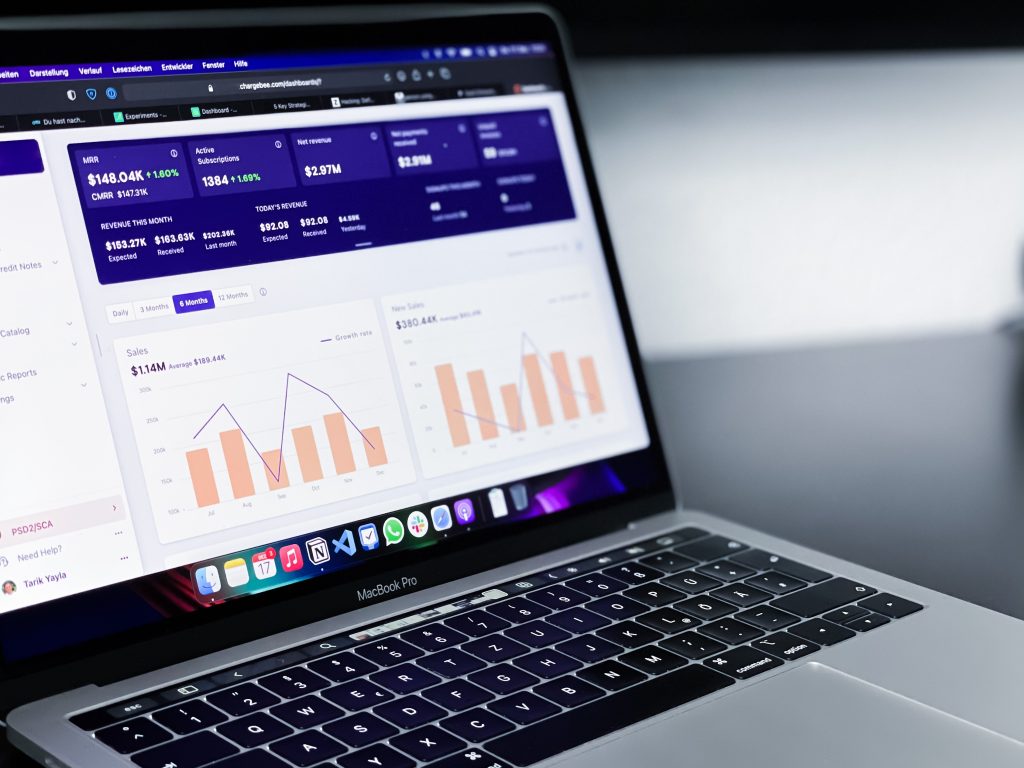
Photo by Scott Graham on Unsplash.

Photo by Scott Graham on Unsplash.
Right, let's get straight to it. If you're running a small business in the UK and your digital marketing feels like it's held together with sellotape and good intentions, you're not alone. The good news? A proper digital marketing audit doesn't require a fancy agency or a bottomless budget, just a bit of time and the willingness to be honest about what's actually working.
Think of this as your annual MOT for your online presence. You wouldn't drive around with dodgy brakes, so why run your marketing without knowing what's broken?
Why Bother With a Digital Marketing Audit in 2026?
Here's the thing: digital marketing has changed dramatically. What worked in 2024 might be actively hurting you now. Google's AI search is reshaping how people find businesses, social algorithms have evolved, and if you're still relying on tactics from three years ago, you're basically using a flip phone in the smartphone era.
A comprehensive audit helps you:
- Stop wasting money on channels that don't deliver
- Identify quick wins that actually move the needle
- Prepare for where digital marketing is heading (not where it's been)
- Make decisions based on data instead of gut feel
Before we dive in, I should mention: if the idea of working through this entire checklist makes you want to close your laptop and open a bottle of wine, we've created a free digital marketing assessment tool that does the heavy lifting for you. It'll give you a personalised report in about 10 minutes. But if you're the hands-on type, let's crack on.

1. Website Performance & Technical Health
Your website is your digital shopfront. If it loads like a 1990s modem or looks broken on mobile, you're haemorrhaging potential customers before they even see what you do.
Check these essentials:
- Page speed: Use Google's PageSpeed Insights to test your Core Web Vitals. Anything under 2 seconds is brilliant; over 4 seconds and people are bouncing faster than a rubber ball.
- Mobile responsiveness: Over 60% of UK web traffic is mobile. Test your site on an actual phone, not just resizing your browser window.
- SSL certificate: That little padlock matters. No HTTPS in 2026? You're telling visitors (and Google) you're not serious about security.
- Crawl errors: Pop into Google Search Console and check for 404s, redirect chains, and indexing issues. These are like roadblocks between Google and your content.
According to HubSpot's latest research, websites that load in under 2 seconds have significantly higher conversion rates than slower sites. Every second counts, literally.
2. SEO Audit: Are You Actually Findable?
SEO in 2026 isn't just about keywords anymore, it's about being the answer to people's questions, whether they're searching on Google, asking ChatGPT, or using voice search.
Your SEO checklist:
- Keyword coverage: Do your main service pages target the searches people actually use? Tools like Google's Keyword Planner (free) or Ubersuggest can show you what your audience is searching for.
- Content gaps: What questions are your competitors answering that you're ignoring? Make a list.
- Meta titles and descriptions: These are still your shop window in search results. Make them compelling, not just keyword-stuffed.
- Internal linking: Are you guiding visitors to related content, or leaving them on dead-end pages? A solid internal linking strategy keeps people engaged and helps Google understand your site structure.
If you're making fundamental SEO mistakes (and most small businesses are), we've covered the most common SEO blunders UK businesses make in detail. Worth a read if you want to stop shooting yourself in the foot.

3. Content Audit: Quality Over Quantity
You probably don't need more content, you need better content. Or at the very least, content that's not embarrassingly outdated.
Review your existing content:
- Identify top performers: Which pages bring in the most traffic? Which ones actually convert? Double down on what works.
- Update or delete: That blog post from 2021 about "2022 trends" makes you look neglectful. Either refresh it or bin it.
- Check for accuracy: Statistics, examples, screenshots, if they're dated, update them. Fresh content performs better in search rankings.
- Content formats: Are you only writing blog posts when your audience wants videos or infographics? Match the format to what actually engages your people.
Search Engine Journal research shows that regularly updating your top-performing content can increase organic traffic by up to 111%. That's not a typo.
4. Social Media Reality Check
Social media audits deserve their own deep dive (which we've written about in our complete social media audit guide), but here's the condensed version:
Questions to ask yourself:
- Are you on the right platforms? If your audience is on LinkedIn and you're posting dancing videos on TikTok, there's your problem.
- What's your actual engagement rate? Vanity metrics like follower count mean nothing if nobody's interacting with your content.
- Are you posting consistently? Disappearing for three months then posting five times in a week doesn't work.
- Is your content adding value, or just shouting "buy our stuff"? Social media is called social for a reason.

5. User Experience & Conversion Optimisation
Here's a brutal truth: your website might be getting traffic, but if it's not converting visitors into customers, it's just an expensive digital brochure.
Critical UX elements to audit:
- Value proposition clarity: Within three seconds of landing on your homepage, can someone explain what you do? If not, fix that first.
- Clear calls to action: Every page needs a clear next step. "Contact us" is fine, but "Book your free 15-minute consultation" is better.
- Trust signals: Customer testimonials, recognisable client logos, security badges, industry certifications, these matter more than most people realise.
- Mobile forms: If your contact form requires pinpoint accuracy on a small screen, people will give up. Test it yourself.
6. Local SEO (If You're Location-Dependent)
For UK businesses serving local areas, Google Business Profile isn't optional, it's essential.
Local SEO checklist:
- Is your Google Business Profile claimed, verified, and completely filled out?
- Are your NAP details (Name, Address, Phone) consistent across every online directory?
- Do you have recent, authentic customer reviews? They're digital gold.
- Have you created location-specific content on your website?
Local businesses that actively manage their Google Business Profile see up to 70% more location visits, according to Google's own data.
7. Analytics & Goal Tracking
You can't improve what you don't measure. Full stop.
Set up proper tracking:
- Google Analytics 4: If you're still using Universal Analytics… well, you can't be because Google shut it down. Make sure GA4 is properly configured.
- Conversion tracking: Are you tracking the actions that actually matter? Form submissions, phone calls, purchases: not just page views.
- Goal setting: Pick 3-5 core metrics that actually relate to business outcomes. Website traffic is nice, but qualified leads paying the bills.
The Shortcut: Let Technology Do the Heavy Lifting
Look, if you've read this far and you're thinking "this sounds like a lot of work": you're right. It is. Which is exactly why we built our free digital marketing assessment tool.
Pop in your website URL, answer a few questions, and you'll get a personalised audit report highlighting your biggest opportunities. It's like having a digital marketing consultant peek under the bonnet, without the consultant fees.
When to Get Professional Help
DIY audits are brilliant for identifying obvious issues, but there's a limit to what free tools can tell you. Consider bringing in expert help if:
- Your website has over 500 pages
- You're investing heavily in paid advertising but not seeing ROI
- You need strategic guidance, not just technical fixes
- Your industry is highly competitive and you need specialised knowledge
Your Action Plan: What to Tackle First
Don't try to fix everything at once: you'll burn out before you make progress. Instead:
- Week 1: Run through the technical and SEO basics. Fix any critical errors in Google Search Console.
- Week 2: Audit your content and update your top-performing pages.
- Week 3: Review your social media and user experience.
- Week 4: Set up proper tracking and goals in your analytics.
Then reassess quarterly. Digital marketing isn't a "set it and forget it" situation: it's an ongoing process of testing, measuring, and optimising.
The businesses that treat their digital marketing like a living, breathing part of their operations (rather than something they set up once in 2019 and never touched again) are the ones that actually grow.
Start with one section of this checklist today. Your future self: and your bank balance( will thank you.)